Every dental practice in BC is accountable to the BC College of Oral Health Professionals for infection prevention and control, and that accountability does not stop at the operatory door. Your cleaning contractor touches the same floors, counters, waiting room and washrooms your patients do. This guide explains where the clinical responsibility ends, where environmental cleaning begins, and what to require from the company holding your keys.
What BCCOHP expects
Since June 30, 2025, all regulated oral health professionals in BC practise under BCCOHP's unified Standards for the Oral Health Team, with version 2 republished on April 1, 2026. Standard 2.5 is the one that reaches your cleaning contract: you must only practise in safe and hygienic environments. Its indicators require the care environment to meet legal and regulatory requirements, and require the team to follow the infection prevention and control requirements set by BCCOHP along with all applicable government requirements. The standards bind regulated professionals and state that unregulated team members should be aware of them and follow them.
The detailed IPAC guidance still published on BCCOHP's site is the Infection Prevention and Control Guidelines inherited from the former College of Dental Surgeons of BC, developed with the former College of Dental Hygienists of BC. That document is the source for the surface categories and housekeeping practices below. It describes itself as a living document under review, so check BCCOHP's practice resources for the current version before you finalize a scope.
Clinical reprocessing versus environmental cleaning
The single most important thing to settle in writing is the boundary between what your team does and what the contractor does.
Clinical reprocessing is the work of your trained dental staff only: instrument cleaning, packaging and sterilization; sterilizer monitoring and logs; waterline maintenance; handling of sharps and biomedical waste; and the between-patient cleaning and disinfection of clinical contact surfaces. Your contractor should never touch a sterilizer, an instrument cassette, a sharps container or anything in the reprocessing area beyond the floor and the regular waste.
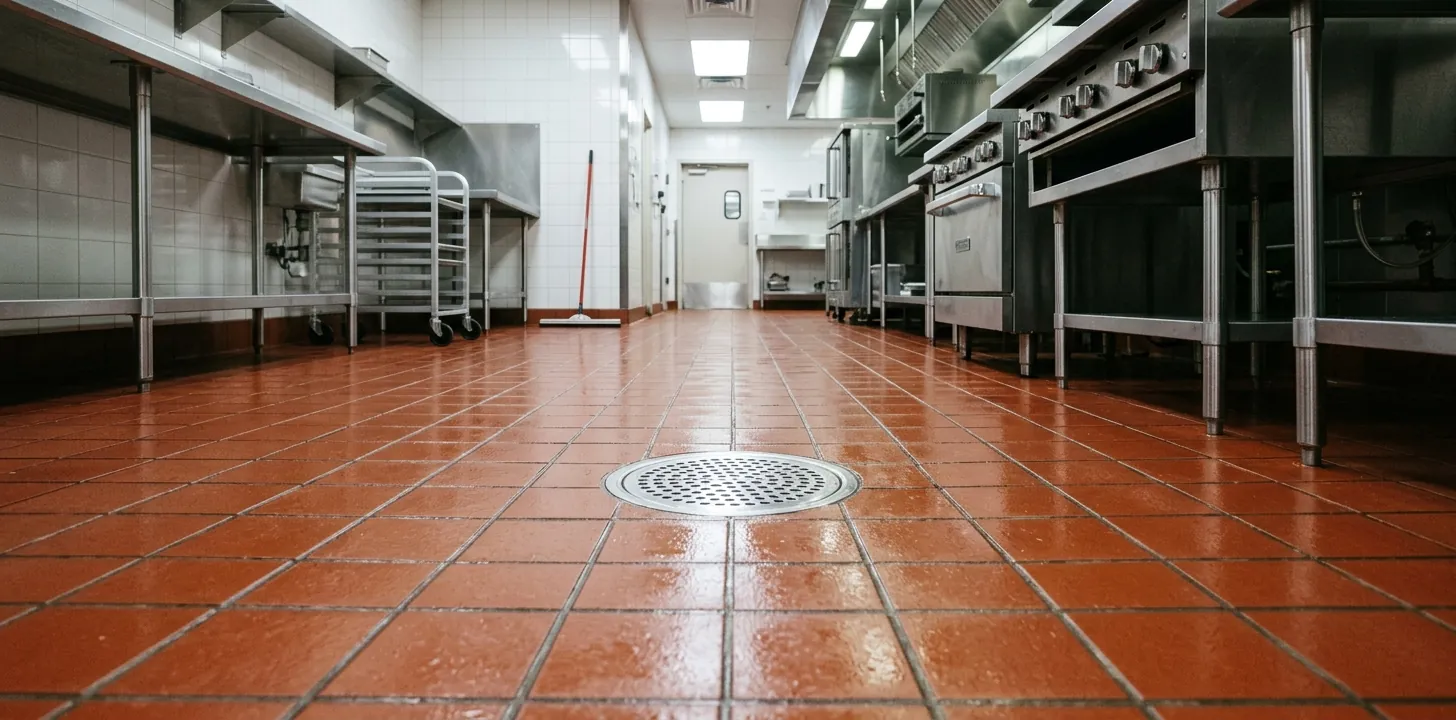
Environmental cleaning is what a commercial cleaning contractor is for: housekeeping surfaces such as floors, walls, baseboards and vents, plus the waiting room and reception, consult rooms, staff room, washrooms, hallways, interior glass, and the end-of-day cleaning of any surfaces your protocol assigns to them.
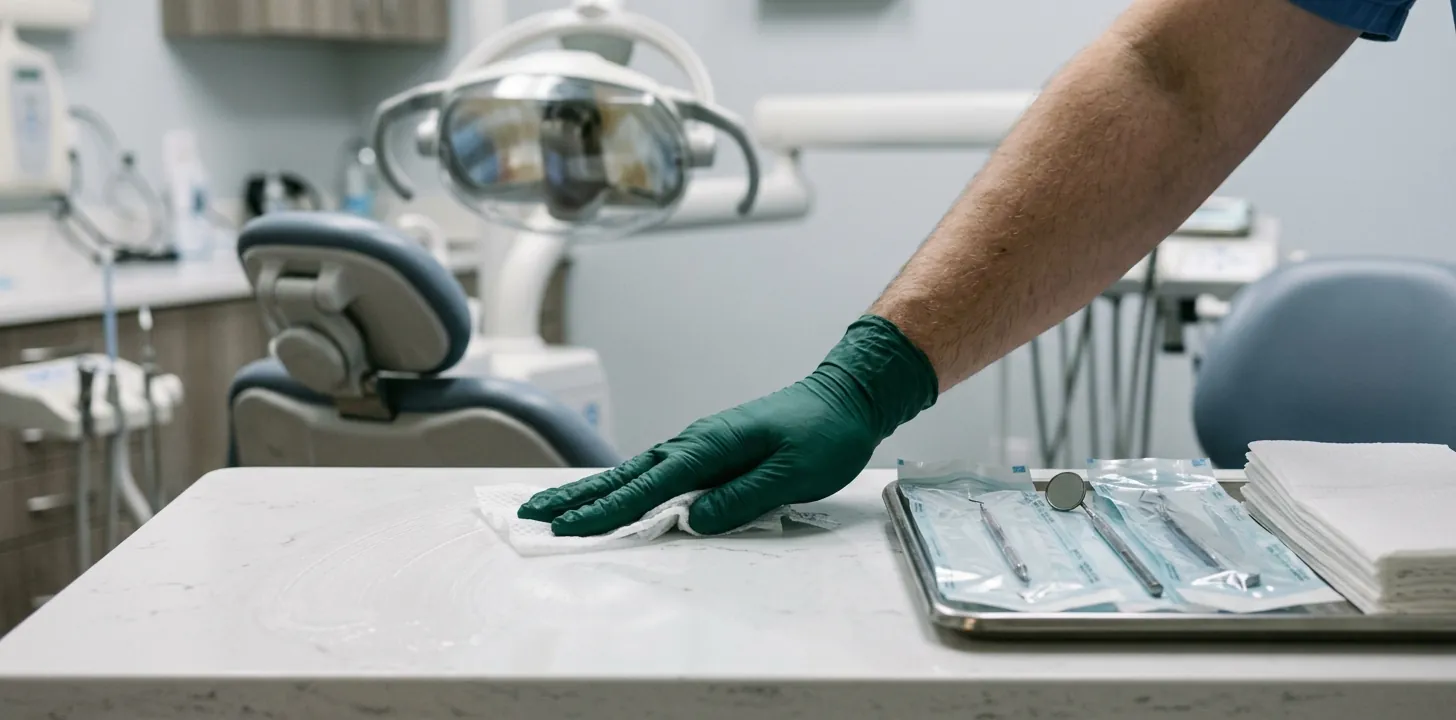
The IPAC guidelines draw exactly this line. Clinical contact surfaces are the ones touched by gloved hands, instruments or spatter during care: chair controls, light handles, countertops, keyboards, drawer and faucet handles, telephones and doorknobs. They are cleaned and disinfected between patients and at the end of the workday with an appropriate low-level disinfectant, or protected with barriers that are changed between patients. Housekeeping surfaces such as floors and walls carry limited transmission risk, are cleaned periodically with detergent, and are disinfected only when contaminated with blood, saliva or other body fluids.
Operatory turnover versus end-of-day cleaning
Between patients, your dental assistants handle turnover: remove and replace barriers, clean then disinfect clinical contact surfaces, and reset the room. This happens during the clinic day and is not contractor work.
At the end of the day, barriers come off, clinical contact surfaces are cleaned and disinfected by your team, and the operatory is left ready for the housekeeping clean. This is where a well-scoped contractor takes over, after the last patient and after your team has finished end-of-day reprocessing.
- Floors damp mopped with fresh detergent or detergent-disinfectant, working from the cleanest operatory outward, with mop heads changed between clinical and non-clinical areas and rinsed and dried after use
- Cove base, chair base, cabinet fronts and kick plates wiped
- Sinks and counter edges cleaned and disinfected only if your protocol includes them, with clinical equipment, chairs and delivery units left alone
- Regular waste removed, never sharps or biomedical containers
- Mop water and cleaning liquids made fresh each day, never carried over
The guidelines also state that carpet and cloth furnishings should not be used in treatment or instrument processing areas, so a contractor should expect hard, seamless floors and nonporous surfaces in those rooms and should know why.
Disinfectant choice: DIN and dwell time
Any disinfectant used in your practice should carry a Drug Identification Number from Health Canada on its label, which confirms the product has been reviewed for the claims it makes. The IPAC guidelines call for an appropriate low-level disinfectant on clinical contact surfaces, and give household bleach at a 1:50 dilution or accelerated hydrogen peroxide as examples for housekeeping surfaces that have been contaminated.
Dwell time is where most contractors fall short. A disinfectant only works if the surface stays visibly wet for the contact time printed on the label, and that time is specific to the product and the claim, from under a minute to ten minutes. A wipe that dries in thirty seconds has cleaned the surface but not disinfected it. Your contractor should be able to name the product, show you the label, state the dwell time and explain how the crew achieves it on a counter, a door handle and a washroom fixture.
Ask for a written product list for your site, with the DIN and the dwell time beside each product, and keep it in your IPAC manual alongside the safety data sheets your WHMIS program already requires.
Waiting rooms, washrooms and the rest of the clinic
The waiting room is where most patients form their opinion of your infection control. It is a public area in IPAC terms, so it is cleaned for appearance and for high-touch hygiene rather than clinical disinfection.
- Nightly: chairs and arms wiped, reception counter and pens, door handles, light switches, the children's area, card terminals, and floors vacuumed with a HEPA-filtered vacuum or damp mopped
- Washrooms nightly: toilets, sinks, taps, dispensers, partitions and floors cleaned and disinfected, consumables restocked, with colour-coded cloths so nothing used in a washroom touches a counter elsewhere
- Weekly: interior glass, vents, baseboards, under seating, magazine racks and the staff room fridge exterior
- Monthly or quarterly: high dusting, carpet extraction in non-clinical areas, and hard floor machine scrubbing
Staff rooms, consult rooms and the business office follow a standard office scope. Keep the reprocessing room out of the contractor's scope beyond its floor and regular waste.
Documentation that protects you
The IPAC guidelines expect an in-office IPAC manual and office-specific IPAC training at orientation, when tasks or equipment change, and reviewed at least annually. Your cleaning contractor's work should be documented to the same standard, because when a complaint, an audit or a patient question arrives, "the cleaners do it" is not an answer.
- A written scope by room, with tasks, frequencies and the products used in each area
- A nightly checklist signed by the crew lead and left on site or sent electronically
- Documented quality inspections at an agreed interval, with photos where useful
- The product list with DINs, dilution ratios and dwell times, and the safety data sheets
- Confirmation that staff are trained in WHMIS and in your site-specific protocol, including what they must not touch
- A current certificate of insurance and a WorkSafeBC clearance letter
What to ask a cleaning company
- Do you currently clean dental or medical practices, and can we see the scope you use there
- What disinfectant will you use here, what is its DIN, and what is the dwell time
- How do you keep washroom cloths and mops separate from clinical floors
- Will the same trained crew clean our practice each night
- What will your crew never touch in our operatories and reprocessing room
- How do you document each visit, and how quickly is a missed item corrected
Next step
If your current contractor cannot answer those questions without checking, your IPAC manual has a gap in it. CedarPact cleans dental and medical clinics across the Lower Mainland on a written scope agreed before the first visit, with WHMIS-trained, background-checked staff and a dedicated account manager. Request a quote and we will walk your clinic with you.
Get a written quote
Tell us about your facility and we will book a walkthrough and send a fixed monthly price. No obligation.
Request a quote