Every food premises in BC is inspected by its regional health authority, and the report is public. Whether your inspector comes from Fraser Health, Vancouver Coastal Health, Island Health, Interior Health or Northern Health, they are checking your kitchen against the same provincial Food Premises Regulation. This checklist is organized around what they look at and who in your operation should own each task.
What the inspector is checking
Environmental health officers inspect on a routine schedule and after complaints. Each inspection produces a report listing violations, each one tied to a section of the Food Premises Regulation and marked critical or non-critical, and the premises receives a hazard rating of low, moderate or high. Fraser Health and Vancouver Coastal Health post these reports online where your customers can read them.
The cleaning-related items that appear most often are these.
- Food contact surfaces not properly washed and sanitized, a critical violation under section 17(2)
- Premises not maintained in a sanitary condition under section 17(1), which covers floors, walls, shelving, under and behind equipment, and storage areas
- Handwashing stations not adequately available, stocked with soap and single-use towels, or accessible, a critical violation under section 21(4)
- Equipment not in good working order, including damaged flooring, broken seals and unsealed gaps
- Evidence of pests, or conditions that let pests enter, harbour or breed, under section 26
- Chemicals stored with food, or in unlabelled containers, under section 27
Your written sanitation plan matters as much as the physical condition of the kitchen. Section 24 of the regulation requires every food service establishment to keep written procedures covering what is cleaned, how often, and which cleaning and sanitizing agents are used and at what concentration. Inspectors ask to see it and test your sanitizer against it.
Back of house versus front of house
Inspectors spend most of their time in the back of house because that is where food safety risk lives. Front of house still counts: dining room floors, washrooms, service stations and the condition of the entrance all feed into the general sanitation items on the report, and they are what your guests judge you on before the food arrives.
A workable split is to treat anything that touches food or food equipment as kitchen staff territory and anything that is building, floor or washroom as contractor territory, with a short written list of handovers in between.
Daily tasks
Kitchen staff, during and at the close of each shift:
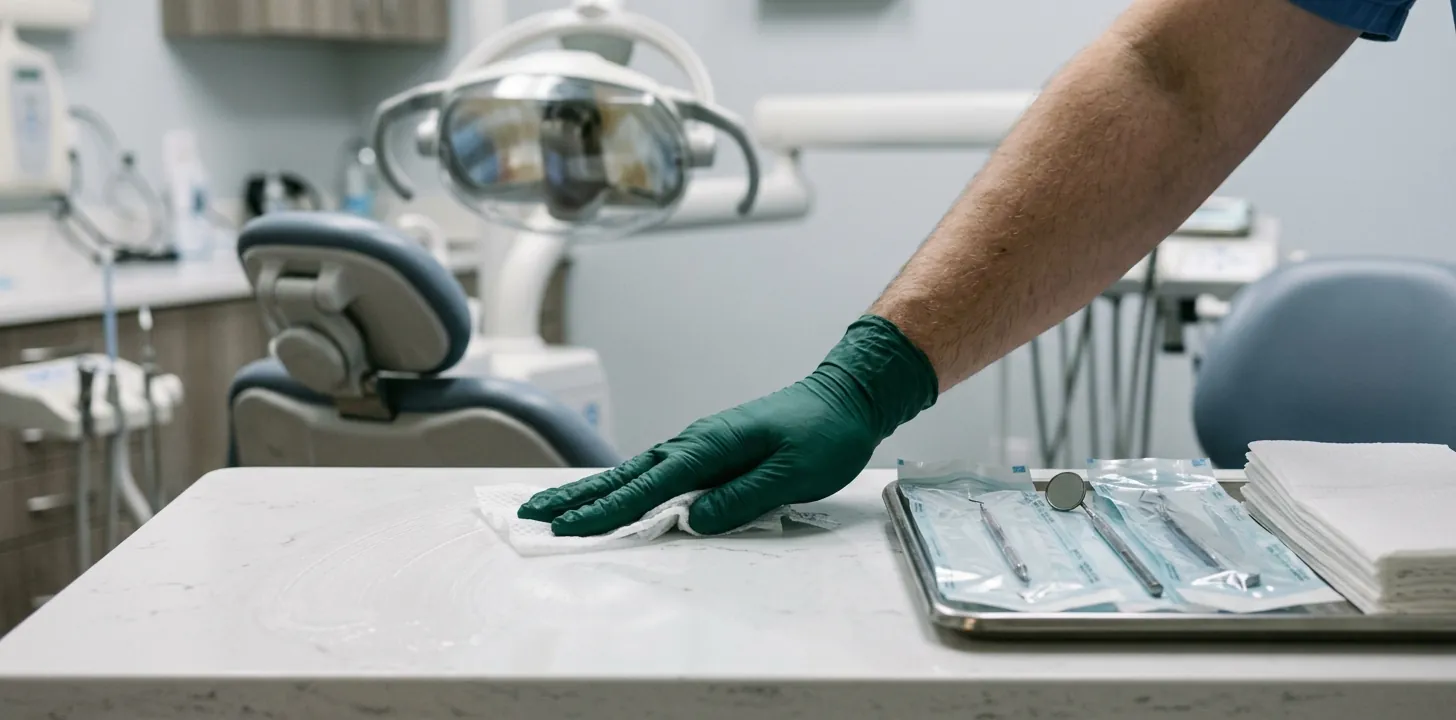
- Clean and sanitize all food contact surfaces: prep tables, cutting boards, slicers, can openers, scales and handles
- Check sanitizer concentration with test strips at the start of each shift and after refilling, and keep it at the strength your sanitation plan states (commonly 200 ppm for quaternary ammonium and 100 ppm for chlorine)
- Wipe and sanitize line equipment, reach-in door handles, gaskets and the exteriors of cooking equipment
- Empty, clean and re-line waste and recycling bins and take waste out to the enclosure
- Restock every handwashing station with soap and paper towel and keep it clear of equipment
- Sweep and spot mop the line and prep floors as spills happen
Cleaning contractor, nightly after close:
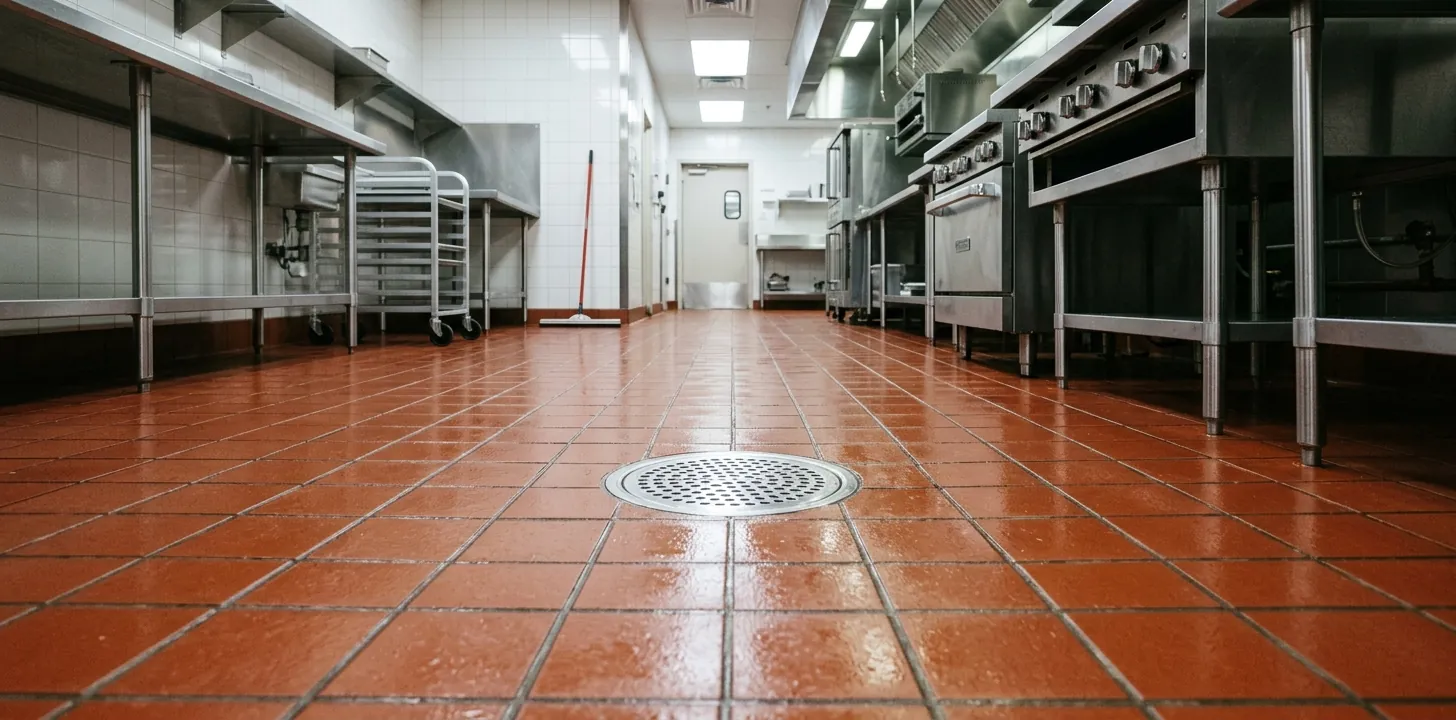
- Degrease and machine scrub or mop kitchen floors, including under equipment on casters and along the cove base, then squeegee to the drain
- Clean and deodorize floor drains and drain covers and flush them with hot water
- Clean, disinfect and restock washrooms: toilets, urinals, sinks, mirrors, partitions, dispensers and floors
- Dining room: tables and chairs wiped, floors swept and mopped or vacuumed, booth and banquette edges cleaned, host stand and service stations wiped
- Entrance glass, door handles, mats and the sidewalk at the front door
- Bar: floors, mats pulled and cleaned, drip trays, sinks and speed rail exteriors
Weekly tasks
- Pull reach-ins, prep tables and the line forward where possible and clean behind and underneath
- Wash walls behind the cook line and dish pit up to splash height
- Clean hood filters (staff), or confirm they went through the dishwasher on schedule
- Deep clean the dish pit, including the machine exterior, the dish tables and the area under the machine
- Scrub and deodorize the dumpster enclosure and the back door area, and wash the area around the grease container
- Clean dining room walls, chair legs and bases, window sills and blinds
- Machine scrub washroom floors and grout
- Dust high surfaces: shelving tops, tops of coolers, light fixtures and exit signs
Monthly and quarterly tasks
- Deep clean walk-in coolers and freezers: shelving out, floors scrubbed, door gaskets washed, condenser area dusted
- Degrease ceiling tiles, vents and diffusers above the line
- Clean the backs of cooking equipment and the wall behind it
- Strip and recoat or deep scrub dining room floors depending on the finish
- Carpet extraction in dining areas, usually quarterly
- Confirm the pest control service happened and the technician's report is on file
- Grease interceptor pump-out on schedule. In Metro Vancouver, the Food Sector Grease Interceptor Bylaw requires a pump-out every 90 days or when fat, oil, grease and solids reach 25 percent of the liquid depth, whichever comes first, and operators must keep the records. Other municipalities have their own bylaws
- Kitchen exhaust hood and duct cleaning by a specialist vendor, at the interval your fire inspector and NFPA 96 call for
Grease, floors and drains
These three areas generate more inspection comments and more slip-and-fall claims than anything else in a restaurant.
Grease migrates. It leaves the fryer on shoes and casters, settles into the grout, coats the drain line and ends up in the dining room. Nightly degreasing of the line floor at the right dilution, followed by a proper rinse, is what prevents the slow build-up an inspector records as premises not maintained in a sanitary condition. Hood canopies should be wiped nightly on the exterior and the filters run through the dish machine on a fixed rotation.
Floors need the right chemistry. An alkaline degreaser on quarry tile, a neutral cleaner on sealed concrete or vinyl, and an enzyme or bacterial treatment for drains and grout that have started to smell. A mop bucket that never gets changed moves grease from the line to the dining room.
Drains are the early warning. A drain that smells, backs up or has fruit flies is telling you the interceptor is full, the line has a grease plug, or both. Flush, brush and treat them nightly.
Who does what, and keeping records
The regulation puts the responsibility on the operator, and the inspector will not care whose contract a missed task falls under. Write the split down.
- Kitchen staff own anything that touches food, the sanitizer buckets, the handwashing stations during service and the hood filters
- The cleaning contractor owns floors, walls, washrooms, dining room, entrance, waste enclosure and the scheduled deep cleans
- Specialist vendors own hood and duct cleaning, grease interceptor pump-outs and pest control, and their reports go in your binder
Keep one binder, physical or digital, that holds your sanitation plan, sanitizer test logs, the contractor's nightly checklist signed by the crew lead, the deep clean schedule with completion dates, the pest control reports and the grease interceptor receipts. FOODSAFE certificates expire five years after issue, so track the dates, and remember that the operator must hold one and at least one certified employee must be on site whenever the operator is away. When an inspector asks how often the walk-in is deep cleaned, the answer should be a date on a page, not a guess.
Next step
If your current contractor's nightly checklist does not line up with this one, that gap is where the next inspection comment comes from. CedarPact cleans restaurants across the Lower Mainland and the Fraser Valley on a written scope agreed before the first visit, with a nightly checklist you can put in your binder. Request a quote and we will walk your kitchen with you.
Get a written quote
Tell us about your facility and we will book a walkthrough and send a fixed monthly price. No obligation.
Request a quote