Night janitorial cleans the building after everyone leaves, and a day porter keeps it clean while everyone is in it. Most Lower Mainland buildings need the first, many need both, and the ones that need both usually find out through a complaint. This guide explains what a day porter does, where the role pays for itself, and how to scope it so you are not paying for a person to stand in the lobby.
What night janitorial covers
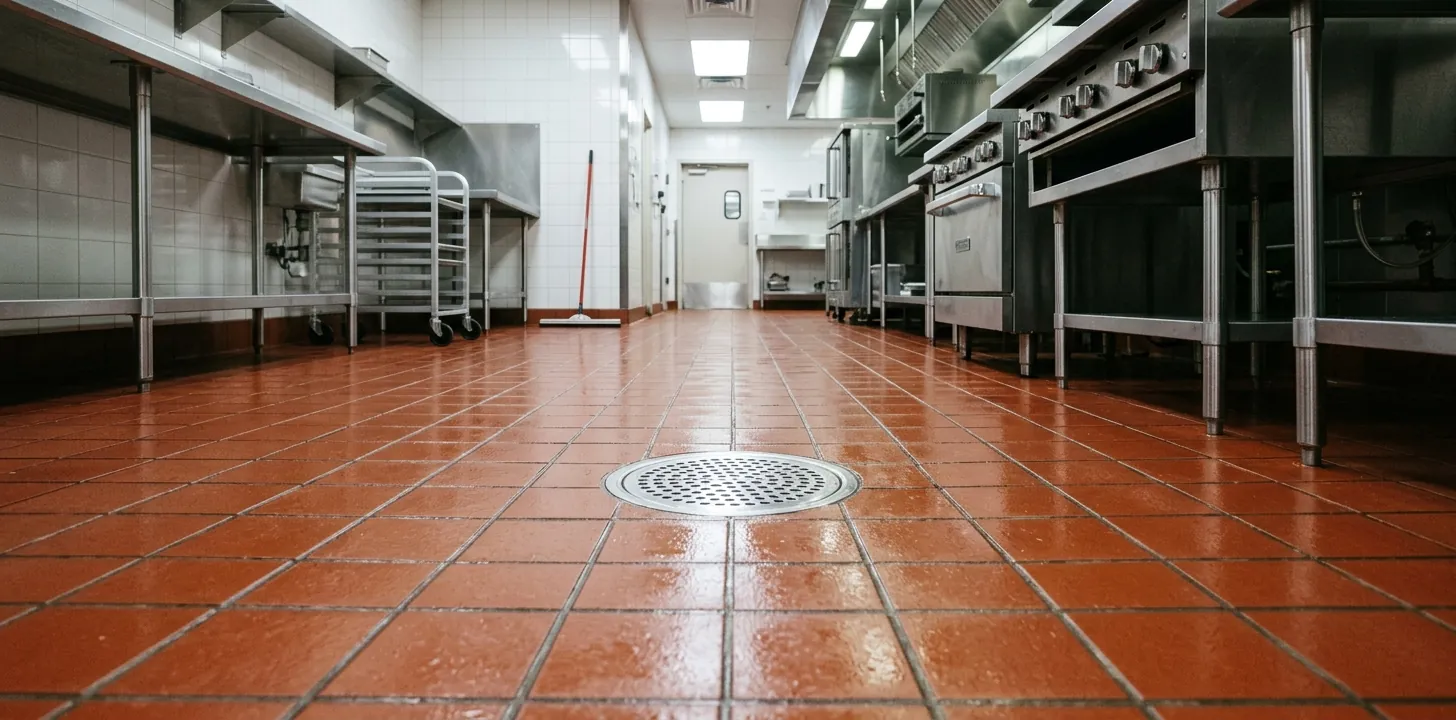
The night crew does the heavy, systematic work that cannot happen with people in the space: vacuuming and mopping whole floors, washroom cleaning and disinfection, kitchen counters and appliances, waste and recycling removal, desks and boardrooms, and periodic work such as floor machine scrubbing, burnishing and carpet extraction. It works to a checklist, room by room, in a service window that ends before the building opens.
Its limitation is simple. Everything it achieves at 11 pm starts degrading at 7 am. In a 30-person office with a few visitors, the washrooms and kitchen hold until the next night. In a building with a public lobby, a food court or a steady flow of patients, they do not.
What a day porter does
A day porter is a trained cleaner, uniformed and on site during business hours, working a route rather than a full clean. The role is part cleaning, part monitoring and part presence.
- Washroom rounds on a fixed cycle: restocking paper, soap and sanitizer, spot cleaning fixtures, mopping spills, clearing waste and logging each visit on the door chart
- Lobby and entrance upkeep: glass doors and push plates, mats, reception counter, furniture, and wet-floor management on rainy days
- Spill and incident response: a dropped coffee in the corridor, a sick child in a clinic waiting room, a leak under a sink, broken glass in the parkade stairwell
- Food court and cafeteria: table turnover, tray stations, waste and recycling sorting, floor sweeps
- Elevators, escalator handrails, stairwells and door hardware wiped through the day
- Loading dock, waste room and recycling compactor area kept orderly, with cardboard broken down
- Exterior: the entrance sidewalk, cigarette receptacles, litter in planters and the first few metres of the parkade
- Meeting room and common area resets between bookings
- Light maintenance reporting: burnt-out lamps, dripping taps and damaged dispensers flagged to your property manager the same day
A good day porter also acts as the building's eyes. They notice the washroom that is used more than the others, the entrance mat that has started to curl, and the tenant who keeps leaving boxes in the fire corridor.
Where day porter coverage pays off
Daytime coverage is not for every building. It earns its cost where soil and traffic arrive continuously rather than overnight.
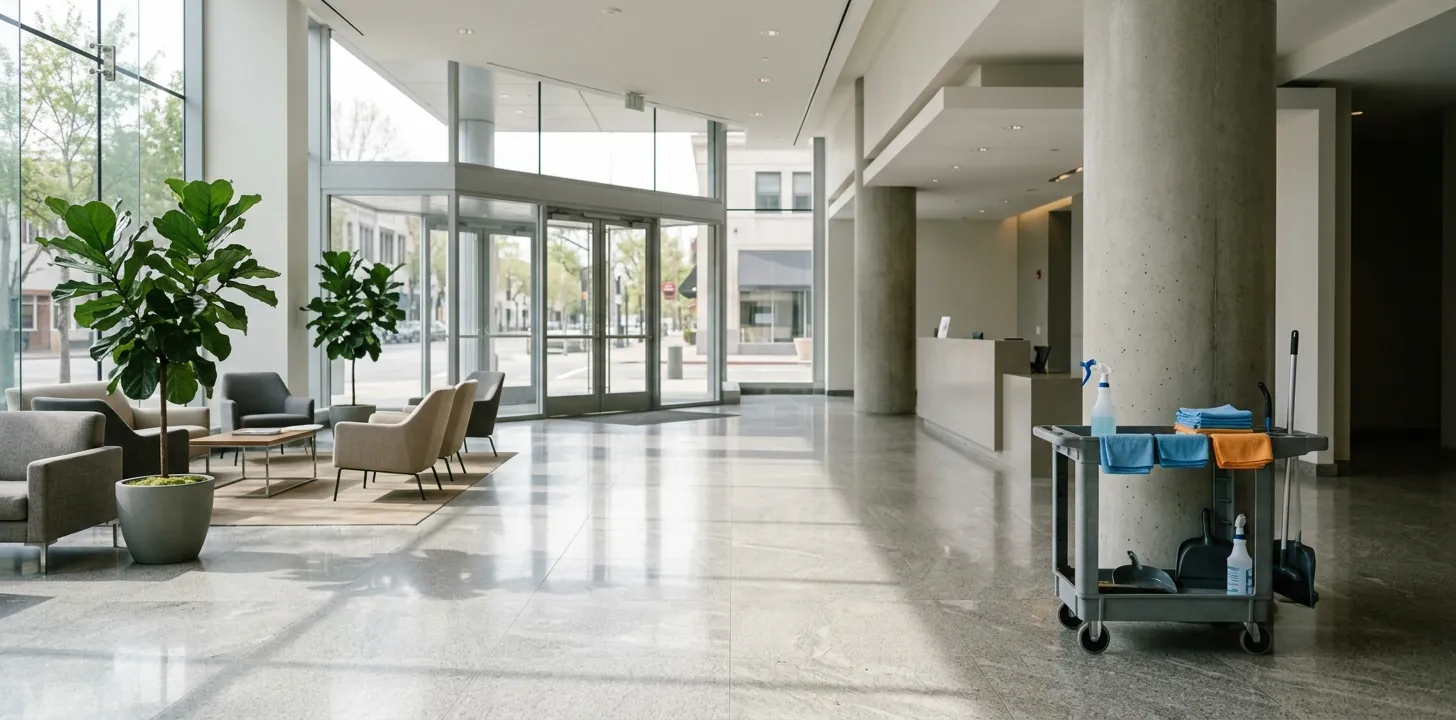
- Office lobbies and multi-tenant towers: the lobby is the landlord's showroom and the ground-floor washrooms serve every visitor; one porter covering lobby, washrooms and elevators through the day is the difference between a Class A impression and a Class B one
- Food courts, cafeterias and cafés inside larger buildings: tables, trays and floors need attention every few minutes at peak, and a night crew cannot help you at 12:30 pm
- Medical, dental and veterinary clinics: waiting rooms and washrooms see sick patients all day, so midday disinfection of chairs, handles and washroom fixtures, plus immediate response to incidents, is part of your infection control picture rather than a luxury
- High-traffic retail and big-box stores: entrances, cart corrals, washrooms, fitting rooms and spills on the sales floor are a slip-and-fall liability during opening hours
- Strata and residential towers: lobbies, mail rooms, parkade stairwells, amenity rooms and garbage rooms are used around the clock; the strata corporation is responsible for maintaining common property under the Strata Property Act, and residents judge that upkeep daily
- Schools, daycares and campuses: washrooms, cafeterias and entrances between classes and at pick-up time
- Gyms and fitness studios: change rooms and equipment areas between class blocks
- Auto dealerships: showroom glass and floors, the customer lounge and washrooms through the sales day
- Event days, moves, renovations and wet-season weeks in any building
The common thread is that the public sees it during the day, and the cost of a bad impression or an incident is higher than the cost of a porter.
Combining both: who does what
The best-run buildings use both and draw the line clearly. The night crew does the systematic clean and the porter maintains it. The failure mode is overlap, where both are paying attention to the lobby and nobody owns the fourth-floor washroom.
- Night: full washroom clean and disinfection; porter: restock, spot clean and log through the day
- Night: full floor vacuum and mop; porter: entrance mats, spills and the lobby hard floor as needed
- Night: kitchen counters, appliances and floors; porter: midday wipe of counters and tables, and waste if bins overflow
- Night: desks, offices and boardrooms; porter: meeting room resets between bookings
- Night: waste and recycling to the loading dock; porter: dock and waste room kept orderly, compactor cycled
- Night: detail and periodic work; porter: reports what the detail schedule missed
One contractor for both roles removes the argument about whose job a missed item was, and gives you one checklist, one account manager and one invoice.
The cost logic
Day porter service is priced on hours rather than square footage, because it is a person on a route rather than a quantity of floor. The variables are the hours per day, the days per week, and whether the role needs specific training, such as infection control in a clinic or confidentiality in a legal or financial tenancy.
The question to ask is not what a porter costs, but what you are paying for the absence of one.
- Tenant complaints handled by your property manager at their hourly cost
- Call-outs to the night contractor for daytime spills, each billed as an extra
- Slip-and-fall exposure in wet-season lobbies and food courts
- Washrooms out of paper from 2 pm, and the reputational cost in a building that charges premium rent
- Night crew hours spent on soil that a porter would have dealt with in a minute while it was fresh
Partial coverage is common and often the right answer: four hours over the lunch peak in an office tower, a morning shift in a clinic, a split shift in a food court, or coverage on the three busiest days of a hybrid week. The hours should match the traffic pattern, and the route should be written down so the hours are productive.
How to scope a day porter
A porter without a written route becomes a person in a hallway. Write the role the same way you would write a night scope.
- Hours and days, with start and finish times tied to the building's traffic: opening, lunch and close
- The route: a list of areas in order, with a target cycle time for each, such as every 60 minutes for ground-floor washrooms and every two hours for upper floors
- Standing tasks by area, and the response expectations for incidents such as a spill, a biohazard, a leak or broken glass
- What is out of scope: maintenance repairs, moving furniture, security functions, and cleaning inside tenant suites unless agreed
- Supplies and where they are kept, including the porter's cart, colour-coded cloths and a HEPA vacuum for daytime use
- Logging: a washroom chart on each door, a daily report to the property manager, and a way for tenants to reach the porter directly during the day
- Appearance and conduct: uniform, identification, how to interact with tenants and the public, and confidentiality in medical or professional buildings
- Backup: who covers sick days and vacation so the route does not go quiet for a week
Review the route after 30 days. Traffic rarely matches the first assumption, and a short adjustment to the cycle times usually recovers an hour a day.
Next step
If your washrooms are clean at 8 am and not at 3 pm, the problem is not your night crew. CedarPact provides night janitorial, day porter service and combined programs across the Lower Mainland and the Fraser Valley, on a written scope with one account manager and one invoice. Request a quote and we will walk your building and map the route with you.
Get a written quote
Tell us about your facility and we will book a walkthrough and send a fixed monthly price. No obligation.
Request a quote