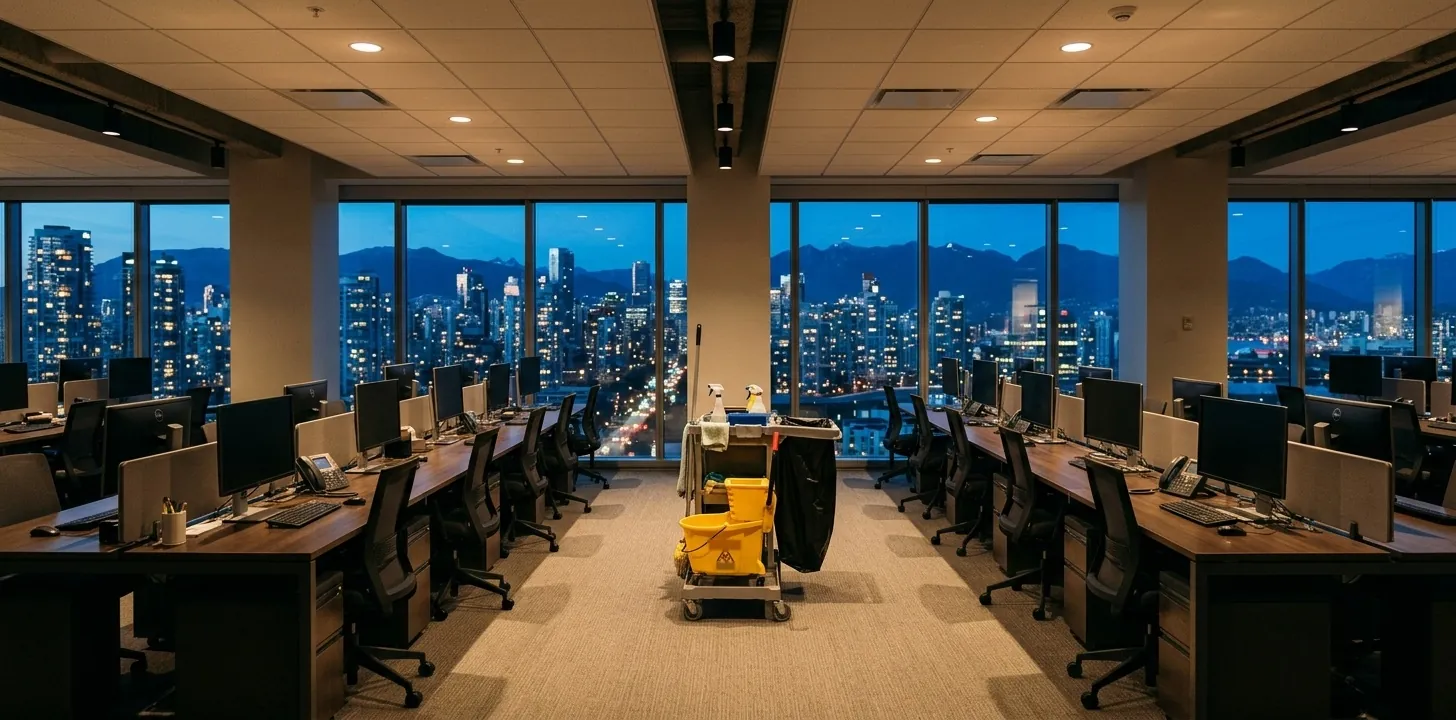
The right cleaning frequency for an office is not a single number. It is a schedule built room by room, scaled to how many people use the space and how they use it. This guide gives you a defensible baseline for a Lower Mainland office, the adjustments for headcount, hybrid work and the wet season, and a way to decide what goes nightly, weekly, monthly and quarterly.
Start with the rooms, not the building
Most frequency decisions go wrong because they are made for the whole floor at once. A 10,000 square foot office does not need the same attention everywhere. Washrooms and kitchens generate most of the complaints and most of the hygiene risk, so they need the most frequent service. Open office areas tolerate a lighter touch. Storage, server rooms and seldom-used meeting rooms can go weekly.
A useful way to think about it is that every room sits on one of four tracks.
- Hygiene track (washrooms, kitchens, reception high-touch points): every service visit, ideally every working day
- Appearance track (lobby, boardrooms, open office floors, entrance glass): most service visits
- Maintenance track (private offices, desks, meeting rooms, stairwells): two or three times a week
- Detail track (vents, baseboards, high dusting, interior glass, light fixtures, upholstery): monthly or quarterly
Your contract should list each room against its track, so the price reflects the work rather than the square footage alone.
Washrooms and kitchens
Washrooms set the standard your staff and visitors judge everything else by, and they are the one area where skipping a day shows.
- Daily, every working day where possible: toilets, urinals, sinks and taps cleaned and disinfected; mirrors; dispensers refilled; partitions spot cleaned; floors swept and damp mopped with a disinfectant cleaner; waste removed; sanitary bins serviced
- Weekly: partitions and doors washed fully, wall tile to splash height, under and behind fixtures, drains flushed, vents dusted
- Monthly: machine scrub floors and grout, descale fixtures, wash walls to full height, clean the extractor grille
- Quarterly: deep clean behind toilets, inspect grout and sealant, clean dispenser interiors
Once an office passes about 50 people per pair of washrooms, or has steady visitor traffic, a midday check by a day porter to restock and spot clean prevents the 3 pm problem that no nightly schedule can fix.
Office kitchens combine food, moisture and dozens of people who each assume someone else cleans up.
- Daily: counters, sink and taps, table tops, microwave interior and exterior, coffee machine exterior and drip tray, fridge door and handle, dishwasher exterior, floors swept and mopped, and waste, recycling and organics removed with bins relined
- Weekly: cupboard fronts, backsplash, chair bases, the microwave door seal, under the sink, small appliance exteriors
- Monthly: fridge interior with notice to staff to clear it, shared supply cupboards, dishwasher filter, the wall behind the waste station
- Quarterly: degrease the vent, pull the fridge out and clean behind it, deep clean the floor
If the kitchen is also where people eat lunch, treat the tables as a daily task on par with the counters.
Desks, meeting rooms and floors
- Daily or every visit: waste and recycling at desks, boardroom tables wiped, meeting room chairs straightened, entrance mats vacuumed
- Two or three times a week: open office floors vacuumed, desk surfaces wiped where they are clear (a clear-desk policy makes this possible), private offices vacuumed and dusted
- Weekly: phones, keyboards and monitors wiped where staff have agreed to it, filing cabinet tops, window sills, door frames and light switches
- Monthly: upholstered chairs vacuumed, partition tops, vents and diffusers, baseboards, interior glass
- Quarterly: carpet spot treatment and extraction in traffic lanes, chair bases and casters, high dusting above two metres
Floor frequency is driven by finish and footfall more than by headcount.
- Carpet tile in open office: vacuum two to three times a week and traffic lanes daily in wet months; extract traffic lanes quarterly and the whole floor annually
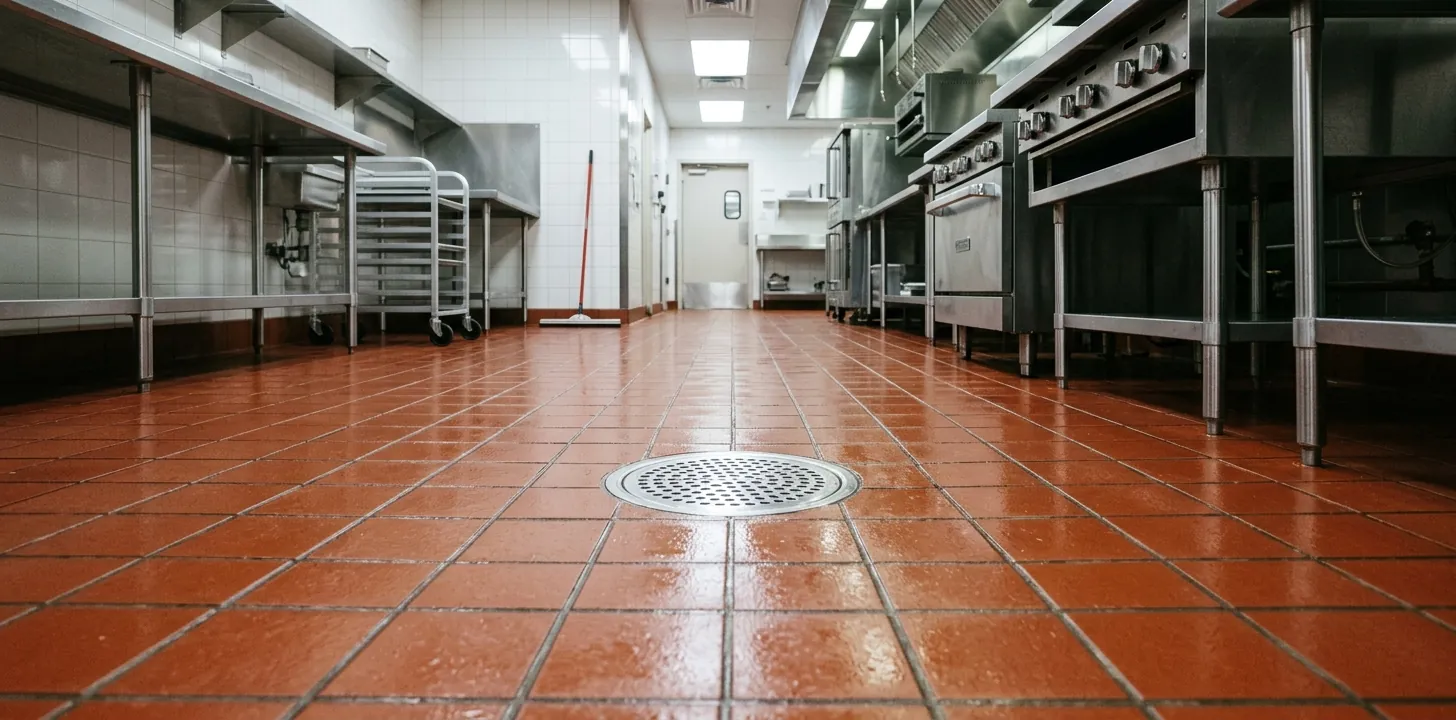
- Vinyl composite tile or sheet vinyl in corridors and kitchens: dust mop and damp mop every visit; burnish monthly; scrub and recoat every six months; strip and wax annually or as the finish wears
- Polished concrete or terrazzo in lobbies: dust mop and auto-scrub every visit in wet months; burnish monthly
- Hardwood or laminate: dust mop every visit and damp mop weekly with a neutral cleaner, never wet mopped
- Entrance mats: vacuumed every visit, extracted monthly in the wet season, and long enough to take several steps of traffic before shoes reach the hard floor
High-touch points
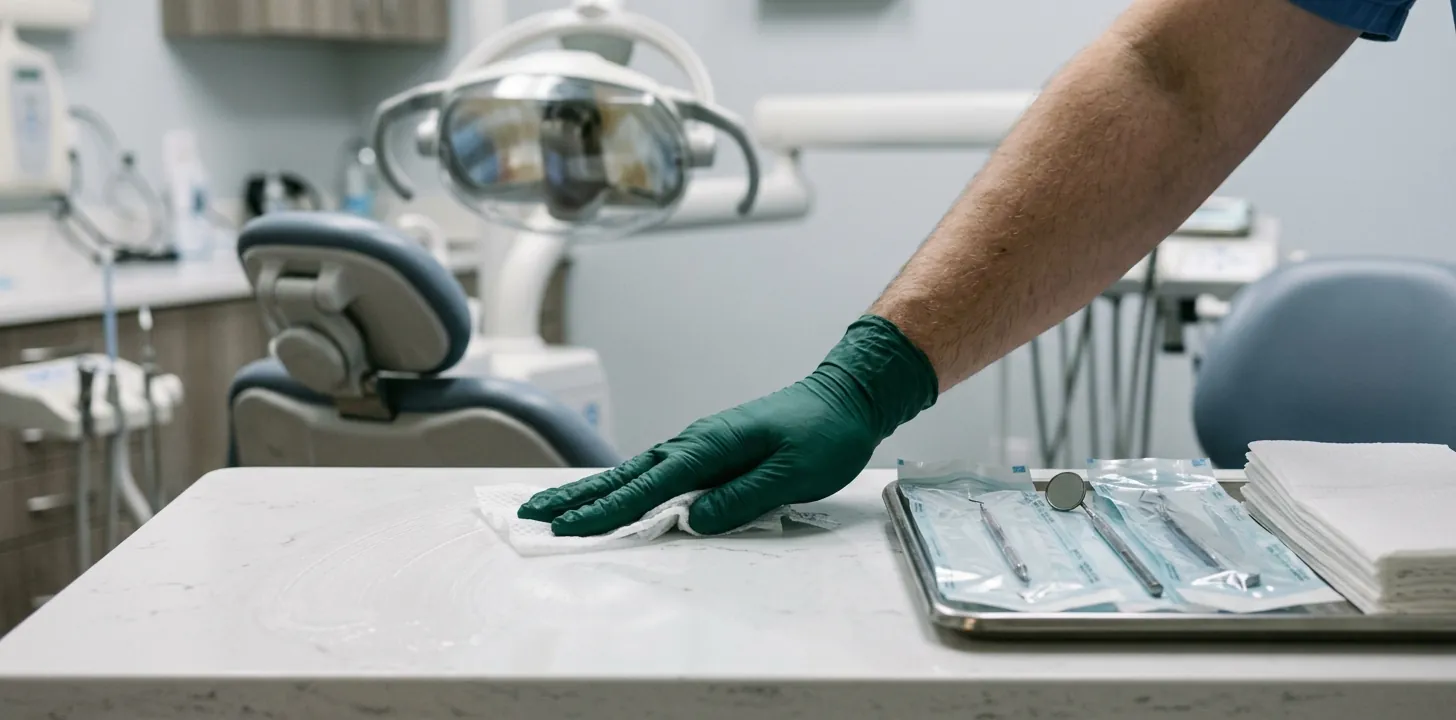
Door handles, push plates, elevator buttons, handrails, light switches, shared keyboards, card readers, kitchen appliance handles and washroom fixtures are where hands meet. In a normal week they should be wiped with a disinfectant every service visit. During respiratory illness season, or when something is moving through the building, move them to daily and add a midday pass if you have day porter coverage. A disinfectant only works for the dwell time on its label, so the question for your contractor is not whether they wipe the handles but how long the surface stays wet.
Scaling by headcount and footfall
The schedule above assumes a typical professional office at full occupancy. Adjust it like this.
- Under 20 people, few visitors: two or three visits a week, with washrooms and kitchen on every visit, is usually enough
- 20 to 75 people: three to five visits a week, washrooms and kitchen every visit, floors on alternate visits
- 75 to 200 people, or any office with a public reception: five visits a week, plus a day porter check on washrooms and kitchen at midday
- Over 200 people, call centres and shift work: nightly service plus day porter coverage through the working day, because the building is never empty long enough for one visit to catch up
- Footfall multipliers: a street-level entrance, a shared lobby, a clinic or training room on the floor, or a public counter each pulls the floors and entrance onto the daily track regardless of headcount
Hybrid work adjustments
Hybrid schedules have changed office cleaning more than any other factor since 2020, and the obvious response is usually wrong. An office that averages, say, 40 percent occupancy across the week is often near full on Tuesday to Thursday and nearly empty on Friday. Cutting to three visits a week and leaving the days unassigned saves little and leaves Wednesday's washrooms dirty on Thursday morning.
- Match the service nights to the busy days, not to the calendar: typically Monday to Thursday nights, with Friday or the weekend used for weekly and monthly detail work while the floor is empty
- Shift desks from a nightly wipe to a weekly wipe, since unassigned desks are used less and a clear-desk policy is easier to enforce
- Keep washrooms and the kitchen on every service night, because occupancy on the busy days is close to what it was before hybrid work
- Move more hours into floor care and detail work; a less crowded office still gets dusty, and hybrid offices often look tired rather than dirty
Seasonal adjustments in the Lower Mainland
Two seasons change the schedule in this region.
The wet season, roughly October through March, brings months of rain, grit and salt tracked onto every floor. Entrance matting should be doubled in length, mats extracted monthly instead of quarterly, lobby and corridor hard floors scrubbed every visit, and carpet traffic lanes vacuumed daily. This is also when slip risk on polished floors peaks, so wet-floor signage and absorbent mats at every entrance become part of the nightly checklist.
Respiratory illness season overlaps the wet season. From late fall through winter, move high-touch disinfection to daily, make sure soap and paper towel never run out in washrooms and kitchens, and consider a day porter pass on handles, buttons and rails in buildings with public traffic.
Summer brings its own list: pollen and dust through open windows and doors, more exterior glass cleaning, pressure washing of entrances and patios, and the best window for floor stripping and carpet extraction while headcount is low.
Next step
If your current schedule is a single frequency applied to every room, you are probably paying too much for the open office and too little for the washrooms. CedarPact builds every contract as a room-by-room scope with frequencies agreed in writing before the first visit, priced as one fixed monthly amount. Request a quote and we will walk your office with you.
Get a written quote
Tell us about your facility and we will book a walkthrough and send a fixed monthly price. No obligation.
Request a quote